



On a beautiful sunny June day in South-Central Michigan, The SiX Food, Agriculture, and Rural Economies Team joined CROP Leader and Senate Agriculture and Natural Resources Chair, Sue Shink, state legislators, and partners ASPCA and FACE Ag for the first ever field tour of the Michigan Food and Farm Caucus.
The group of around twenty policymakers, advocates, and farmers came together to hear directly from Michigan producers who are building a sustainable and safe food system for Michiganders.
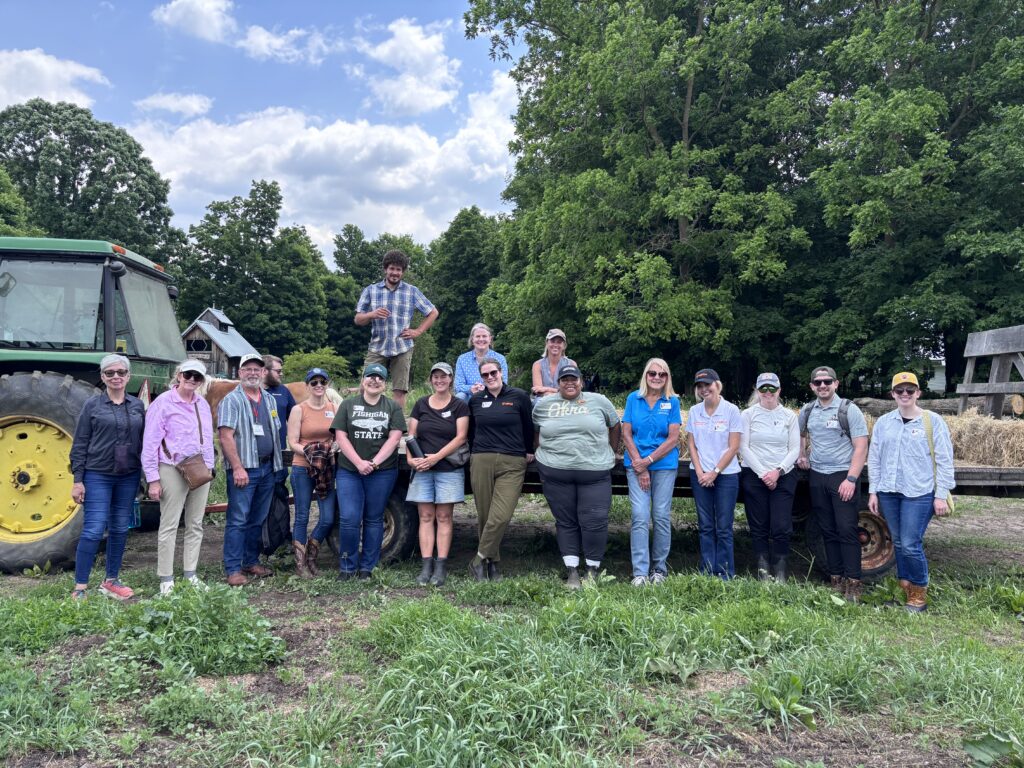
Michigan Food & Farm Caucus Field Tour Attendees at the Whitney Farmstead.

For the past year, the Michigan Food and Farm Caucus, created and chaired by Senator Shink with the support of SiX, has been connecting with the Michigan Department of Agriculture and Rural Development (MDARD) and experts to strategize on policy avenues that could more effectively leverage existing support and programming to support Michigan’s independent farmers in feeding their local communities and building up the state’s food security.
The Field Tour was the culmination of these discussions and helped policymakers to see exactly how the policy discussions they had been having would impact Michigan farmers.
Senator Shink shared about the tour:
Michigan’s independent and sustainable farmers are the backbone of our state’s economy and their work ensures Michigan families have access to nutritious and locally grown food. Tours like this one are essential because I need to hear directly from the people doing this work including what’s working, what isn’t, and what barriers are standing in the way of their success.
My role as a legislator is to help create a Michigan food system where small, independent farmers can actually thrive. This means listening to farmer stories and looking critically at the policy opportunities to streamline regulation and reduce the barriers to selling local food in Michigan’s communities.
What’s stayed with me most from this tour is just how critical local food access and processing infrastructure really are. Getting nutritious food into the communities that need it most is an agriculture policy issue but also a health and justice issue. This visit with Michigan farmers and Argus Farm Stop has only deepened my commitment to getting that right.”
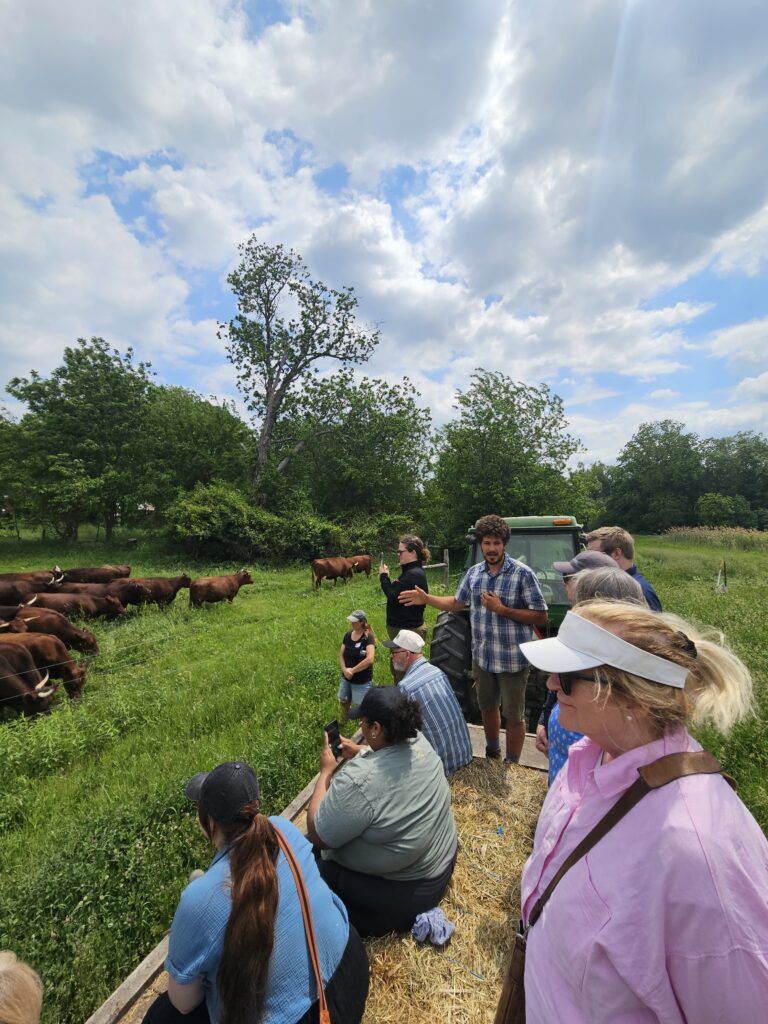
Attendees on a hayride visit with the cattle at Whitney Farmstead while host Matthew Whitney gives a rundown of their pastured grazing technique.
The first stop on the tour was to Whitney Farmstead, a century farm practicing regenerative beef and lamb ranching just outside of Ann Arbor. For the past 12 years, Malaika and Matthew Whitney had been transitioning Malaika’s 200-acre family farm into a pastured paradise, placing some of the farm into conservation and building out a wetland preserve while grazing their cattle and lambs on nutrient rich, native grasses.
During the hay-ride tour of the Whitney Farmstead, participants heard the story behind why the Whitneys pursued this type of farming despite the numerous bureaucratic and financial hurdles to growing meat in an alternative way, rejecting the industrial status-quo. Participants also learned about the numerous benefits that the Whitneys receive from farming in a regenerative pastured model including healthier soils and animals, increased carbon sequestration, and a greater price/per pound when selling due to the high quality of their meat. The Whitneys also shared some of their challenges including lack of access to nearby meat processing (the closet slaughterhouse is located 6 hours away) and the concern around pesticide exposure for themselves and their young children due to their neighbor’s conventional crop farming just across the road.
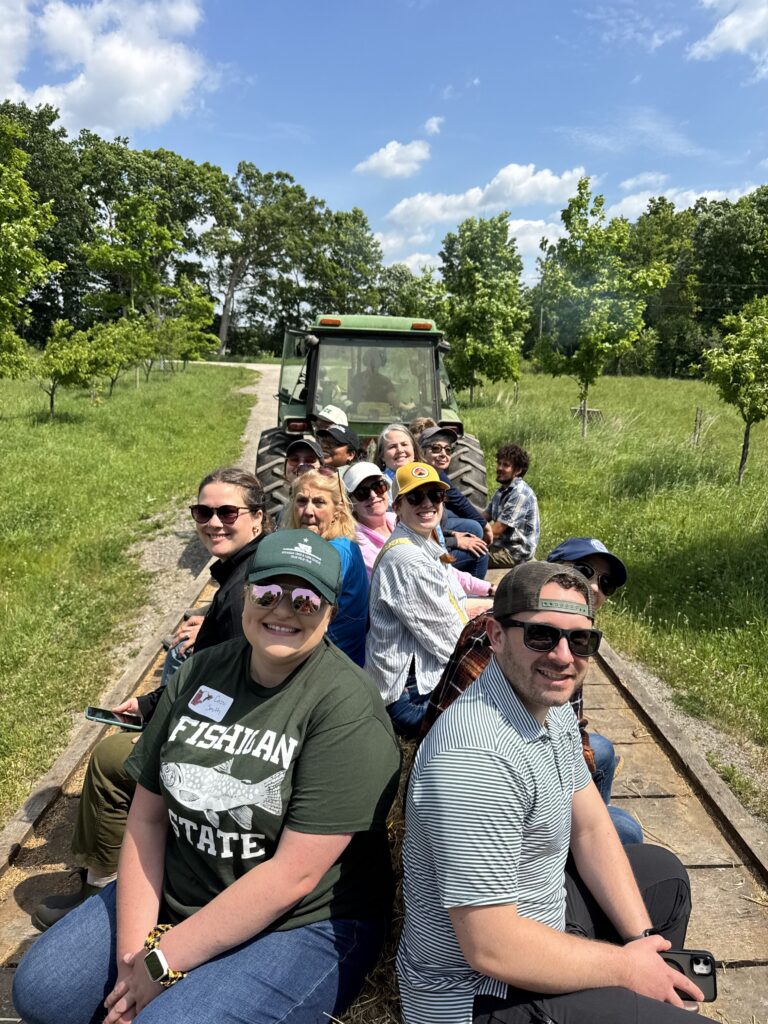
Farm tour attendees enjoy a hayride at Whitney Farmstead.
Seeing the lush, green pasture and the happy, grazing animals first-hand, the policymakers saw an important example of how many Michigan farmers choose to farm for the health of their families, the environment, and their communities despite the challenges.
After Whitney, the group headed into Ann Arbor to visit Argus Farm Stop where the Whitneys sell a lot of their meat to their local community. The Argus Farm Stop was the first Farm Stop in Michigan and has been a pioneer example for the Farm Stop model across the country. At Argus, the group met with the founders, staff, and some of the farmers supported by Argus. MDARD Director Tim Boring also stopped by to talk about the importance of collaboration between policymakers, agencies, advocates, and farmers to build a healthier Michigan food system.
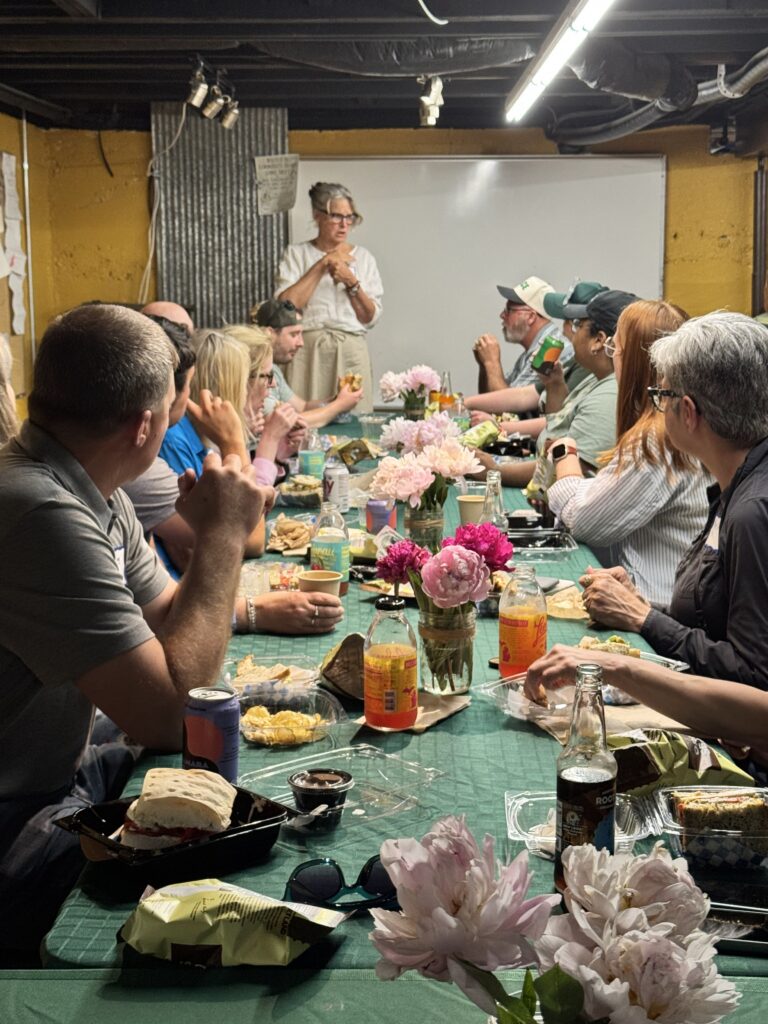
Argus Founder Kathy Sample speaks to tour attendees about the Farm Stop model over lunch.
The Farm Stop model is a wholly unique model of bringing locally grown produce, meats, and food items directly to the community. Similar to a year-round farmers market, Argus works on a consignment model, meaning that instead of producers selling their products to Argus at wholesale prices, Argus sells the producers products for them and takes a 30% commission, directing 70% directly back to the producer. Over the past 11 years, Argus has returned over $30 million directly back to Michigan local farms and food producers while feeding hundreds of Michigan families healthy, locally grown food on a weekly basis.
At Argus, policymakers heard about the red tape and bureaucratic hurdles that strain this type of model. Sharing space with the producers and advocates most impacted also provided a unique opportunity to begin brainstorming potential solutions in state policy that could better support the Farm Stop model and local producers.
For Michigan legislators this was the first of what will hopefully be many iterations of connecting with independent producers and rural communities to gain insights and input as they work to build a more sustainable and equitable Michigan food and farm system.